Memory Foam Layer Stack Comparison: Read Before You Buy
A memory foam layer stack comparison is mostly a reading exercise, because the same words and numbers mean different things from brand to brand.
 By WellnessTrim
6 min read
You open a mattress page, read that it is "cooling" and "medium," then open a second page and find the same words pointing at something that sounds completely different. The layer stacks make it worse: one brand lists six layers, another lists a cover and a core, and none of the numbers seem to share a scale. Comparing memory foam mattresses starts to feel like a guessing game.
It is really a reading exercise. This article decodes the three things that cause the most confusion — firmness labels, layer stacks and cooling claims — using only what brands publish on their own product pages. When you want the full figures side by side, our memory foam mattress buying guide records them for each pick, with the date each spec was checked.
Firmness labels do not share a scale
A "5" is not a universal 5. Each brand builds its own scale, and some publish no scale at all.
- WinkBeds GravityLux is sold in Soft, Medium and Firm, which the brand numbers 4, 5 and 7 on its own scale.
- Nolah Original is described as medium-firm, 5-6/10.
- Saatva Contour5 is described as medium, 5-7/10.
- Leesa Original is listed as medium comfort with no scale number, and Amerisleep AS3 is listed simply as medium.
Notice that Saatva's single "medium" covers a range that WinkBeds splits into separate feels. That is why the number alone cannot settle a comparison. Where a brand does state who the feel suits, that note is worth more than the digit: Saatva lists the Contour5 as ideal for side sleepers, "but also great for back and combination sleepers," and Amerisleep lists side and back for the AS3. In the details we reviewed, WinkBeds gives the three feels and their numbers without a sleep-position note, so read its product page for the wording it publishes there.
If you have an injury or a condition that affects how you sleep, ask a healthcare professional which feel suits you before you order.
Try This: Write each brand's firmness wording and any sleep-position note next to the model name, then compare the wording rather than the number across your shortlist.
Memory foam layer stack comparison, decoded
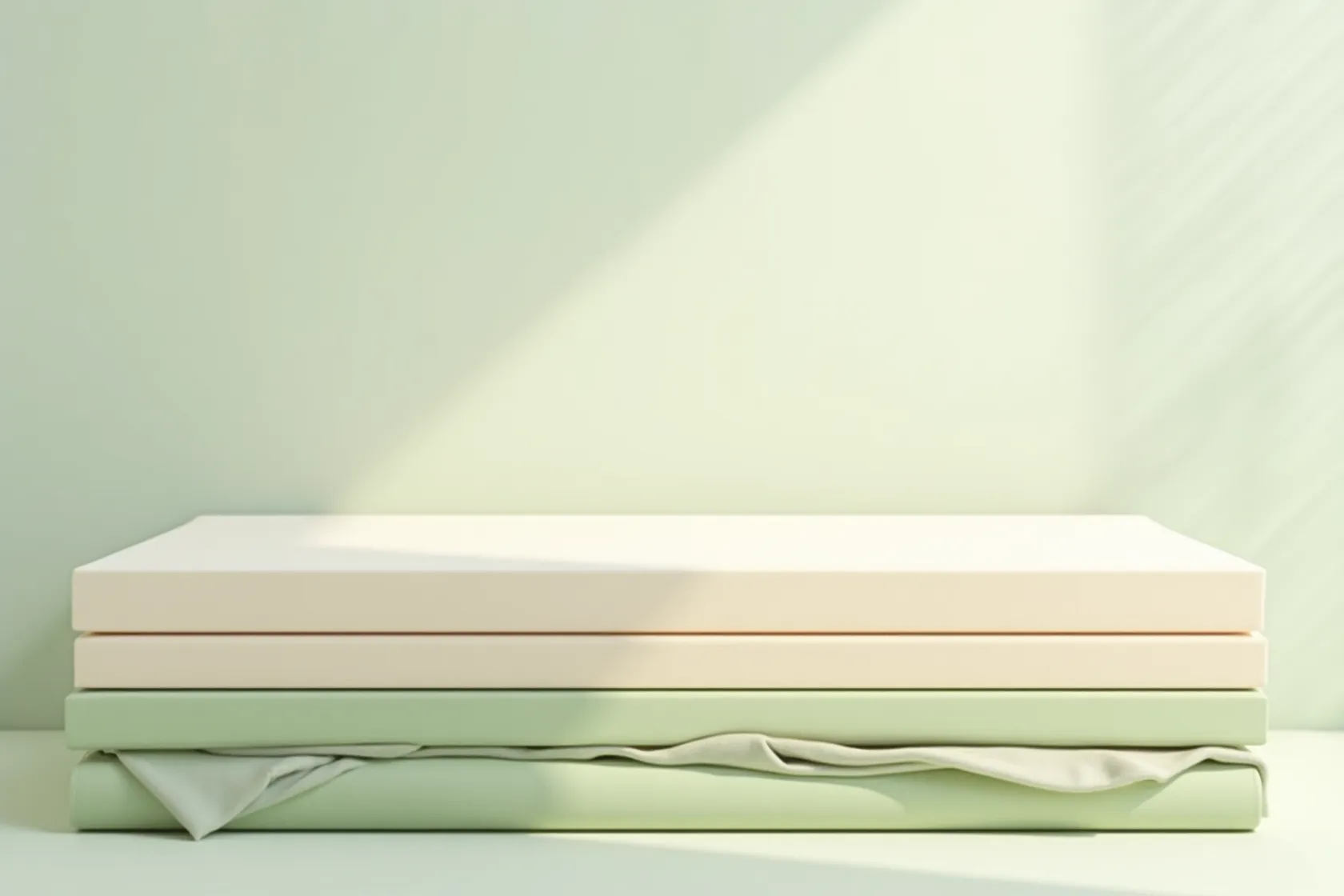
Most stacks follow the same order: a cover, comfort layers, sometimes a transition layer, and a support base. The upper layers shape the first feel; the base holds everything up. Brands describe those layers in very different amounts of detail.
- Leesa Original lists a 4-layer build: 2" of GreenFlex BioFoam, 2" of memory foam and a 6" support base, with all foams listed as CertiPUR-US® certified.
- Saatva Contour5 lists a 3" layer of 5 lb memory foam over a durable support foam base.
- Nolah Original lists six foam layers, including copper-infused Cool Contouring Foam and Tri-Zone™ foam, over a stabilizing base.
- WinkBeds GravityLux lists a TENCEL® cover with gel-infused foam, AirCell™ memory foam, Progression Foam™ and an ATLAS Core™, described across 7 support layers.
Density is one of the few layer specs brands state as a number rather than an adjective, which makes it easier to compare: Saatva lists 5 lb for its memory foam layer, Leesa lists 3 lb for its upper foams, and WinkBeds lists 1.8 lb for its core. Density is not a feel rating, but it is at least a figure you can put side by side, where "premium foam" tells you nothing.
Try This: List the layers in order, cover to base, and note the thickness and density wherever the brand states them, then compare the top layers first — that is where the feel is set.
Where a cooling claim actually lives
"Cooling" covers at least three different things on these pages: something in the cover, something inside a foam layer, or a paid upgrade.
- WinkBeds puts 2" of gel-infused foam inside the cover itself.
- Nolah uses copper-infused Cool Contouring Foam as a layer in the stack, and offers a Cooling Pillow Top as an upgrade.
- Saatva lists an adaptive cooling technology and a CoolVent™ system that the brand says absorbs and disperses excess body heat.
- Leesa offers a cooling quilt top as an upgrade alongside a breathable knit cover, and Amerisleep lists cooling technology on the AS3 spec sheet alongside plant-based Bio-Pur® memory foam.
The practical question is not "does it cool?" but "where does the feature sit, and does it change the price?" A feature built into the cover is part of the standard mattress. An upgrade is a line item you have to price in, and it can change which model comes out cheaper once you compare complete costs.
Try This: Mark whether the cooling feature sits in the cover, in a foam layer or in a paid upgrade — the paid upgrade belongs in your price comparison, not your feature list.
All-foam or hybrid: what changes
A hybrid keeps foam on top and swaps the foam base for a coil layer; an all-foam mattress builds its support entirely from foam. The cleanest way to see the difference is when one brand sells both under the same model name.
Amerisleep offers the AS3 as an all-foam mattress and as the AS3h hybrid, which the brand lists as foam plus coils, on the same 12-inch profile and medium feel. That lets you compare constructions without also comparing two brands' vocabulary. The Saatva Contour5, by contrast, is listed as all-foam only.
Your existing base matters here too. Nolah says the space between slats should be no more than 5.5 inches apart, and Saatva lists a mattress foundation or box spring plus a bunkie board. WinkBeds, Leesa and Amerisleep do not list base requirements in the details we reviewed, so ask the brand before assuming your frame qualifies.
Try This: Measure your frame's slat gaps and check the maker's stated base requirement before you compare models — a mattress that needs a new base is not the cheaper option.
Twin sizes, toppers and add-ons
Size availability varies more than the marketing suggests. WinkBeds lists a Twin at 38" x 75" and a Twin XL at 38" x 80", and Leesa lists a Twin as well. In the details we reviewed, Nolah lists a Queen, and Amerisleep lists Queen, King and Cal King. So if you need a memory foam twin mattress, confirm the model is actually sold in that size before you get attached to it.
Weight is worth a look for a one-person setup or an upstairs room: Leesa lists its Queen at 71 lbs and its King at 90 lbs.
On toppers: a memory foam mattress topper is a separate purchase, and the same questions apply in miniature. What is the cover, what is the comfort layer, what holds it up, and what are the return terms for that item? Read the topper's trial and return terms as their own policy rather than assuming they match the mattress.
Try This: Check the size list on the product page before you read anything else — if your size is not offered, the rest of the comparison is academic.
How you know it is not a paid placement
That is a fair objection, and the answer is in how the guide is built rather than in a badge. Our memory foam mattress buying guide shortlists models that independent buying guides currently recommend, then compares them only on what each manufacturer publishes on its own product page: specs, features, warranty and list price, with the date each check was made.
Brands cannot pay for placement. We have not hands-on tested these mattresses, and the page says so plainly; the picks are a comparison of published specifications, not a lab test or a sleep test. Some links in the guide may earn a commission — the Amazon links — and the guide labels each one. The links to brand stores earn nothing. That is why the guide shows you the spec table instead of asking you to take its word.
The habits carry over to any other review site. Copy certification names exactly as written: CertiPUR-US® and GREENGUARD® Gold appear on several of these pages, and a page that only says "certified" has told you nothing. Then follow the maker's setup and care instructions for the model you choose, and read our medical disclaimer for the boundaries of what we cover.
Try This: Copy the exact certification names from a product page into your notes — a page that only says "certified" has not told you what is certified or which foams it covers.
The Bottom Line
Comparing memory foam mattresses gets easier once you stop looking for a shared scale and start copying what each brand actually states: its own firmness wording, its layer list with whatever thickness and density it publishes, and where the cooling feature sits. Do that and you can narrow to a shortlist instead of a wish list. The full figures for each pick, with the check dates, are in our memory foam mattress buying guide.
General information only, not medical advice. Talk to your doctor before making big changes to your diet, exercise or sleep, especially if you have a health condition or take medication. See our medical disclaimer and editorial policy.