What to Check Before Buying a Home Treadmill
The specs matter less than whether the machine fits your room, your outlet and the way you actually train.
 By WellnessTrim Editorial Team
5 min read
By WellnessTrim Editorial Team
5 min read
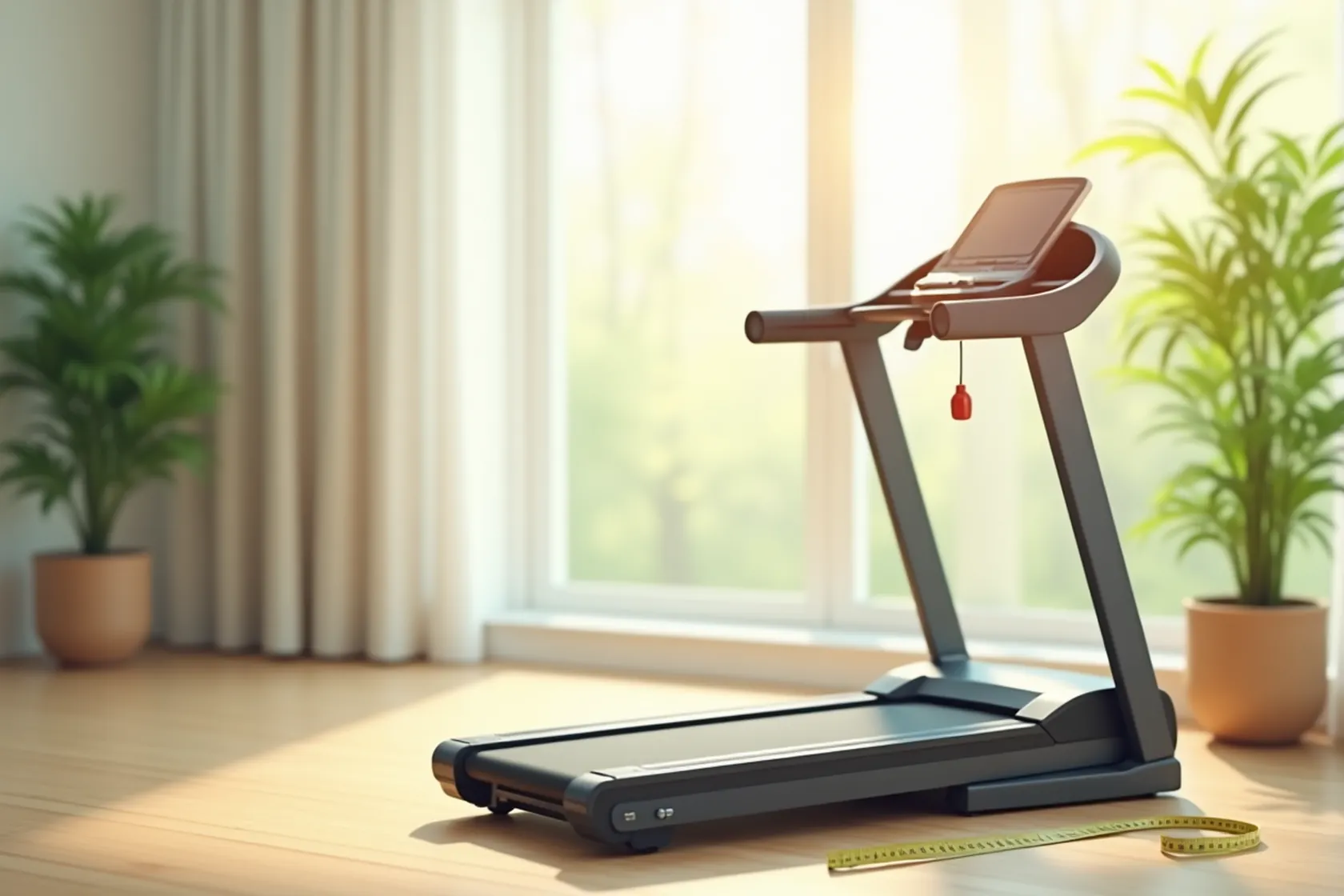
A home treadmill is a lot of floor space and a lot of money, and the details that decide whether you are happy with it are rarely the ones at the top of the spec sheet. Published information from each brand is enough to answer most of the practical questions before you buy, as we do in our best home treadmill guide.
This article walks through the checks in the order they usually trip people up: space and folding, power and outlets, speed and incline, screens and subscriptions, deck feel, and warranty. We research published information rather than testing machines ourselves, so every figure here comes from the manufacturer's own page.
Measure the floor before the specs
Before you compare motors or screens, work out what your room can hold. A treadmill is either fixed furniture or something you fold away between sessions, and that single difference decides more than any spec.
The NordicTrack Commercial 2450 is the folding option in our guide: NordicTrack says it "easily folds up and rolls away for a cleaner, more flexible home setup." The Wahoo KICKR RUN sits at the other end. Wahoo lists it at 72 x 38 x 58 in / 183 x 97 x 148 cm and 429 lb / 195 kg, and recommends allowing 79 in / 200 cm of clear space behind the treadmill.
Wahoo also lists a running surface of 60 x 22 in / 152 x 56 cm, a deck height of 12 in / 30 cm when neutral rising to 18 in / 46 cm at maximum incline, and a maximum user weight of 250 lb / 113 kg. Ceiling height, doorways and stairs on the delivery route all matter too, and if you are unsure whether a floor can take the weight, that is a question for someone qualified rather than a guess.
Try This: Measure the footprint, add the clearance the brand lists behind the belt, and mark it out on the floor with tape before you order.
Power and outlet needs
Power is the part of the purchase that happens after delivery, and it can mean booking an electrician. Wahoo says the KICKR RUN requires a dedicated 15 amp circuit on a non-GFCI outlet or breaker, which is a specific requirement: nothing else on that circuit, and a particular outlet type.
Not every room has that setup, and if yours does not, the outlet becomes part of the cost of the machine. The NordicTrack product pages we researched do not list power requirements, so ask before delivery rather than after the boxes are in the hallway.
Try This: Photograph the outlet you plan to use and the label on your breaker panel, then compare it with the requirement the brand lists.
Speed and incline ranges
Incline usually earns its keep at home more than top speed does, because it changes how hard a steady session feels. Here is what the four picks list:
- NordicTrack T Series 5: a 10% incline range and 0-10 MPH, which NordicTrack says supports up to a 6-minute mile pace.
- NordicTrack Commercial 2450: 12% incline to -3% decline, with speeds up to 14 MPH, which NordicTrack describes as a 4:17 mile pace.
- NordicTrack X24: a wide incline-to-decline range without published figures, and a 0-12 MPH motor.
- Wahoo KICKR RUN: a 15% maximum incline, -3% maximum decline, 0.5% lateral tilt, and a maximum speed listed as 4:00 min/mile (2:30 min/km).
Decline is the feature people overlook. The Commercial 2450 and the KICKR RUN both list negative grades, and Wahoo also lists half a percent of left and right tilt.
Try This: Write down the fastest pace and the steepest grade you use now, then check that against the published ranges instead of the other way round.
Screens and subscriptions
This is where the ongoing cost lives. The X24 and the Commercial 2450 each list a 24" pivoting touchscreen and access to 10,000+ iFIT workouts, and both are built around an iFIT Pro Membership. NordicTrack describes that membership as syncing speed, incline and intensity to a trainer and adapting in real time.
The T Series 5 takes the opposite approach: it pairs with iFIT on your own phone or tablet, includes a device shelf, and shows live workout stats on a 5" LCD display, with speed and incline set manually or by iFIT. You are not paying for a screen, and you are not locked into one either.
The KICKR RUN works with Wahoo, Zwift, Kinomap, Humango and Peloton, which matters if you already train in one of those apps. Wahoo also lists a device shelf that holds up to a 17 in / 43 cm laptop weighing up to 15 lbs / 6.8 kg. If you are also shopping for outdoor sessions, our best running shoes for beginners guide and the fitness guides hub are useful next stops.
Try This: List the subscriptions you already pay for before deciding whether a built-in screen adds anything you will use.
Deck feel and cushioning
Cushioning is a preference rather than a ranking, and each brand describes it differently. NordicTrack lists KeyFlex cushioning on the T Series 5 and a cushioned deck on the Commercial 2450, and says the X24 has 27% more cushioning than the nearest competitor. Wahoo describes the KICKR RUN deck as balanced between cushion and energy return, closer to asphalt or packed dirt than to a gym treadmill.
None of that tells you which deck you will prefer, and the language is marketing as much as engineering. If you have a joint or health condition, ask a healthcare professional which feel suits you rather than going by the wording on the page.
Try This: If you can, walk or jog on a few different decks at a gym or store and note which feel you would want underfoot for twenty minutes.
Warranty and the fine print
Warranty terms vary widely across these picks. The two NordicTrack machines with published terms, the X24 and the Commercial 2450, each list a lifetime motor warranty. The KICKR RUN lists a 1-year warranty. The T Series 5 has no warranty listed on the product page we researched.
A motor warranty covers the motor, not the whole machine, so read what else is included and for how long. Pricing is just as uneven: the KICKR RUN is listed at $6,999.99, while the three NordicTrack machines do not list a price on their product pages, so you have to check the retailer.
Try This: Note down the warranty length for each component, not just the headline, and save a copy of the terms with your receipt.
Set it up safely
Follow the manufacturer's manual for assembly, placement and use, and keep the area around and behind the belt clear. The clearance figures brands publish exist for a reason, such as the 79 in / 200 cm Wahoo asks for behind the KICKR RUN. Keep children and pets away while the belt is moving, and stop using the machine if anything feels loose or unusual.
If you have an injury or a health condition, or any doubt about starting a new routine, speak with a healthcare professional first, as explained in our medical disclaimer.
The Bottom Line
None of these checks needs a showroom visit. Measure the space, confirm the outlet, decide whether you want a built-in screen or your own device, and check the warranty before the machine arrives. Our best home treadmill guide compares the four picks side by side on published specs, including what each one does not include.
General information only, not medical advice. Talk to your doctor before making big changes to your diet, exercise or sleep, especially if you have a health condition or take medication. See our medical disclaimer and editorial policy.