Thick or Thin Yoga Mat: Thickness, Grip, Latex and Care
 By WellnessTrim Editorial Team
8 min read
By WellnessTrim Editorial Team
8 min read
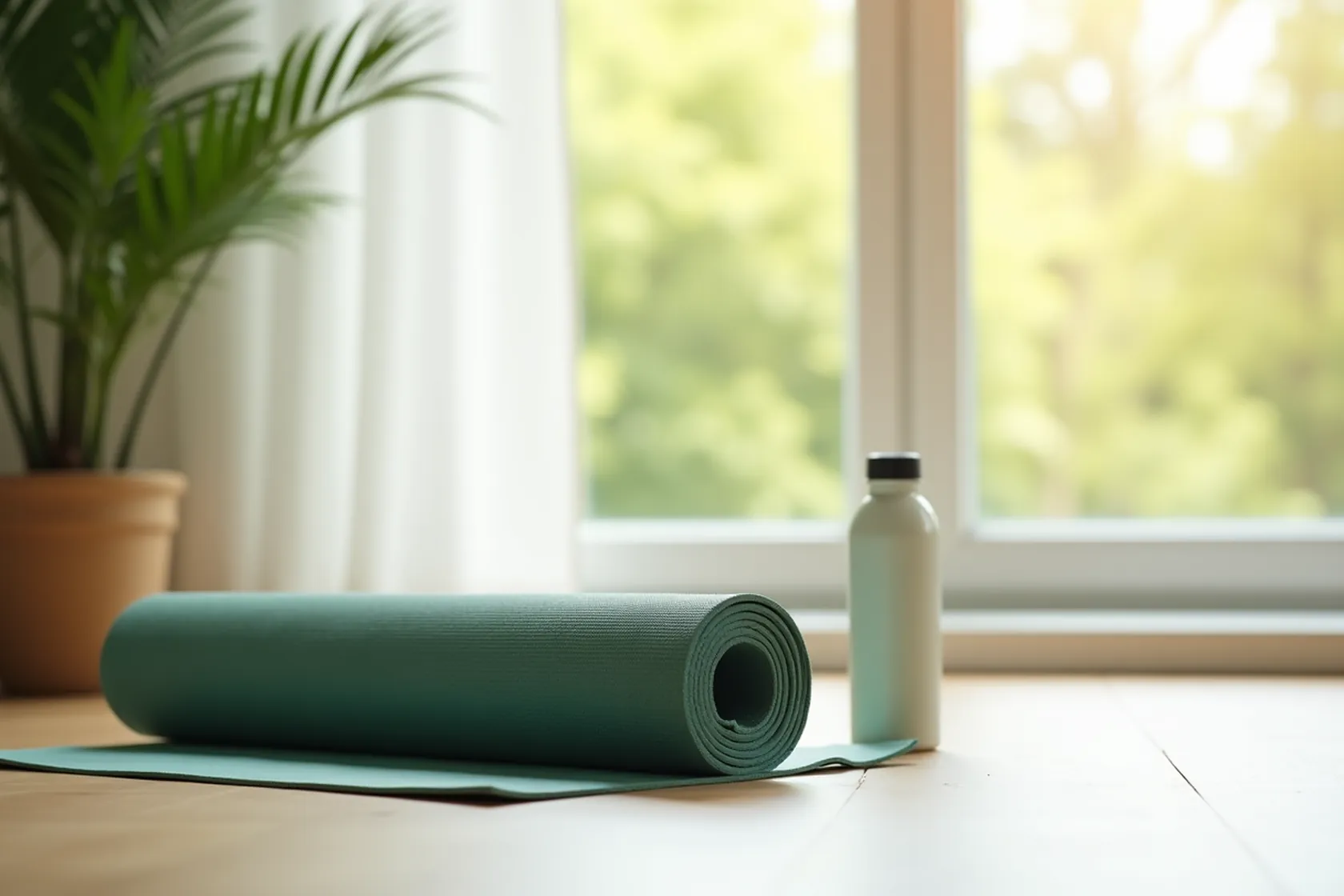
A yoga mat is one of the few pieces of fitness gear where the important differences are easy to describe: how thick it is, what the surface does when you sweat, what it is made of, how much it weighs and how the brand says to clean it. This article walks through those points using published information from Manduka, Gaiam, lululemon, JadeYoga and Liforme. We research the brands' own product, FAQ and warranty pages rather than testing mats ourselves.
If you want the side-by-side version, our guide to the best yoga mats compares the specific mats named below on thickness, grip, material, size, price and warranty.
Thickness: cushion versus stability
Liforme's own buying guide frames thickness as a trade-off: too thin and knees and wrists feel the hard floor, too thick and balancing poses start to feel unsteady. On our list, most full-size mats are 4-6 mm. The thickest is the Jade Fusion at 8 mm (5/16 in), which Jade calls its thickest and densest mat, and also the heaviest at about 8.5 lb. The thinnest is the Manduka eKO Superlite at 1.5 mm, a travel mat that folds and can be laid over a studio mat.
- Manduka PRO: 6 mm
- Gaiam Classic: 5 mm
- lululemon The Mat 5mm: 5 mm
- Jade Harmony: about 4.8 mm (3/16 in, converted from inches)
- Liforme Classic: 4.2 mm
- Jade Fusion: 8 mm
- Manduka eKO Superlite: 1.5 mm
A short version of the same idea: Manduka describes the PRO as high-density, firm support that delivers floor-like stability, while Jade positions the 8 mm Fusion as the mat for when you want or need extra comfort.
Try This: Decide what you want more of first. If balance poses matter most, stay in the 4-6 mm range; if you want maximum cushioning for seated and kneeling shapes, look at 8 mm and accept the extra weight.
Surface and sweat
How a mat behaves when you get damp depends on whether its surface absorbs moisture or keeps it out.
Closed-cell surfaces keep moisture out of the mat, which is why Manduka says the PRO's closed-cell surface seals out moisture and bacteria and is easy to wipe clean. The trade-off is in the brand's own words: because the surface does not absorb moisture, "the mat may feel slick if you're prone to sweat." Manduka suggests pairing it with a hand towel, or a hot yoga mat towel for heated practices. The eKO Superlite is closed-cell too, with the same caveat and the same towel suggestion.
Open-cell and absorbent tops go the other way. lululemon says the grippy top layer of The Mat 5mm absorbs moisture to help you stay grounded in high-sweat practices, and the mat is reversible: the other side is cushioned natural rubber, which the brand describes as textured grip for low-sweat practices. Liforme says its GripForMe top surface absorbs moisture to prevent slipping during intense, sweaty sessions. Jade's natural rubber mats are open-cell, and Jade's FAQ says to wipe the mat after each use for vigorous or hot practice.
One caveat to read before buying: Liforme's own FAQ says its mats are not specifically designed for hot yoga, and that regular heated practice or humid climates could speed up the degradation of the biodegradable materials. If heated classes are your main practice, check what the brand says about that use.
Try This: If you sweat a lot but prefer a closed-cell mat, keep a yoga towel with your kit. It keeps the surface dry without changing the mat.
Materials and latex
Most mats are made from PVC or natural rubber, and the difference matters most if you have a latex allergy.
PVC is the classic durable option. The Manduka PRO is PVC, crafted in Germany and certified STANDARD 100 by OEKO-TEX. The Gaiam Classic is also PVC. Both are labelled latex-free on their product pages.
Natural rubber mats grip differently and carry more allergy caveats. Jade says its mats contain no PVC, EVA or other synthetic rubber and are made in the United States, and that it plants a tree for every mat sold. The Manduka eKO Superlite is natural tree rubber and described as 99% latex-free, though Manduka says it is not recommended for those with latex sensitivities. lululemon's The Mat 5mm is 55% natural rubber, 23% synthetic rubber, 15% polyurethane, 5% polyester and 2% nylon, and the page carries an explicit warning: "CONTAINS LATEX: People with rubber or latex allergies should avoid contact with this product as it contains natural rubber and may contain latex." Liforme's base layer is natural rubber, and the brand's FAQ notes that natural rubber does contain latex; the top surface does not.
Jade's wording is worth reading closely: "Although Jade mats are 99% latex free, as they are from rubber trees, there may be trace amounts of latex proteins in the mats so we recommend persons with latex allergies avoid contact with our mats."
Try This: Read the material line before you order. If you have a latex or rubber allergy, a PVC mat labelled latex-free is the simpler choice, and a healthcare professional is the right person to advise you on your situation. See our medical disclaimer.
Weight and length
Weight only matters when the mat leaves your house, but when it does it matters a lot.
- Manduka eKO Superlite: 1.5 mm, 2.2 lb
- Jade Harmony: about 5 lb
- lululemon The Mat 5mm: 5.24 lb
- Liforme Classic: about 5.5 lb (about 2.5 kg)
- Manduka PRO: 7.5 lb Standard (Short 7 lb, Long 9.5 lb)
- Jade Fusion: about 8.5 lb
Jade is blunt about its own thickest mat, calling the Fusion range its heaviest and describing those mats as "weighty choices as a commuter mat."
On length, many standard mats are 71 in (180 cm), and some are 68 in. Manduka sells a Long at 85 in, Jade sells 74 in versions, and the Liforme Classic is 185 x 68 cm, which the brand describes as longer and wider than standard; Jade's extra-wide extra-long version is a separate product at 28 x 80 in. For sizing guidance, Liforme suggests a standard mat suits most people up to about 6 ft, while Manduka suggests people over 1.80 m look for an extra-long mat.
Try This: Pick a mat longer than you are tall, and if you carry it to class, weigh the extra cushioning in pounds before you commit to an 8 mm mat.
Cleaning and care
Every brand we looked at says roughly the same thing: use a cleaner made for the material, wipe rather than soak, and let the mat dry fully before rolling it up. The details differ.
- Manduka PRO: use Manduka Yoga Mat Wash & Refresh or warm water, because "other cleaning solutions are not tested or recommended." Spray the surface and wipe dry with a clean cloth before rolling; avoid soaking, harsh household cleaners or machine washing; store rolled top-side out in a cool, dry place.
- Manduka eKO: wipe with Manduka Natural Rubber Yoga Mat Restore and a damp cloth, then lay flat or hang to air dry before rolling. Do not soak, submerge or use harsh chemicals, and keep natural rubber out of direct sunlight and hot cars.
- Gaiam Classic: spot clean with Gaiam's mat wash or a damp cloth with cold water and mild detergent, then dry flat. Gaiam also suggests unrolling and airing the mat for 2-3 days before first use because of the new-mat odor, and warns that extended sun exposure can make the mat fade and become brittle.
- lululemon The Mat 5mm: wipe with a natural cleanser after use and store out of direct sunlight. The care icons say to ensure the mat is dry before rolling, lay flat to dry, do not wash and do not bleach.
- Jade mats: Jade's FAQ recommends wiping with a damp cloth weekly, or after each use for vigorous or hot practice, and says its plant-based mat wash is the only cleaner recommended. Avoid alcohol, petroleum-based solvents, soaps and high-concentration essential oils, and keep natural rubber mats out of the sun; they are not intended for outdoor use.
- Liforme Classic: add 3-5 pumps of mat cleaner to a soft damp sponge, leave for 30 seconds, wipe with a clean damp sponge and lay flat to air dry away from direct sunlight. Store rolled coloured side out once dry, and do not fold it.
Try This: Never put disinfectant on an absorbent open-cell mat. It cannot be rinsed back out. A damp cloth plus the cleaner the brand sells for that material is the safer habit.
Warranty, price and where to buy
Warranty is where the price differences start to make sense.
- Manduka PRO: a lifetime guarantee covering manufacturing and workmanship defects under normal use. Manduka's guarantee page describes lifetime as approximately 10 years of regular use, with a maximum of one replacement per purchase, and only for mats bought from Manduka or a Manduka authorized seller in the US; cosmetic wear and slipping are excluded. The eKO Superlite has no warranty stated on its product page, and the lifetime guarantee covers PRO Series mats only.
- Gaiam Classic: the product page states an "Exclusive lifetime mat guarantee"; the terms are not detailed on the page.
- Jade mats: 1 year for wear and manufacturing defects. It is void for sun or UV damage, essential oils or unapproved cleaners, and is not valid for purchases from unauthorized resellers. Jade says Amazon is not an authorized seller, so buy from Jade or a Jade-named retailer if you want the warranty to hold.
- lululemon The Mat 5mm: no mat warranty is stated on the product page; the page shows free 30-day returns.
- Liforme Classic: Liforme says it is not practicable to offer a lifetime guarantee or a warranty. Instead there is a 30-day money-back guarantee on mats bought directly from Liforme, plus refund or replacement for faulty items reported promptly.
Prices seen on the brand sites on the check date ran from $24.98 for the Gaiam Classic and $54 for the eKO Superlite, through $99.95 for the Jade Harmony, $118 for lululemon's The Mat 5mm and $144 for the Manduka PRO, up to $165 for the Liforme Classic and $174.95 for the 68 in Jade Fusion ($199.95 for the 74 in).
Try This: Buy from the brand or an authorized seller. Manduka's lifetime guarantee and Jade's 1-year warranty both depend on where the mat came from.
The Bottom Line
Thickness and surface do most of the work: 4-6 mm suits most people, 8 mm gives the most cushioning if you can carry the weight, and a 1.5 mm travel mat is the one that fits in a bag. Match the surface to how much you sweat, check the latex statement if you have an allergy, and clean with what the brand recommends. Our guide to the best yoga mats compares the mats named here side by side.
General information only, not medical advice. Talk to your doctor before making big changes to your diet, exercise or sleep, especially if you have a health condition or take medication. See our medical disclaimer and editorial policy.