Wide Mouth Insulated Bottle Cleaning: Why the Opening Matters
Wide mouth insulated bottle cleaning comes down to access: if you cannot reach the bottom with a sponge, the design is the problem, not your scrubbing.
 By WellnessTrim Editorial Team
6 min read
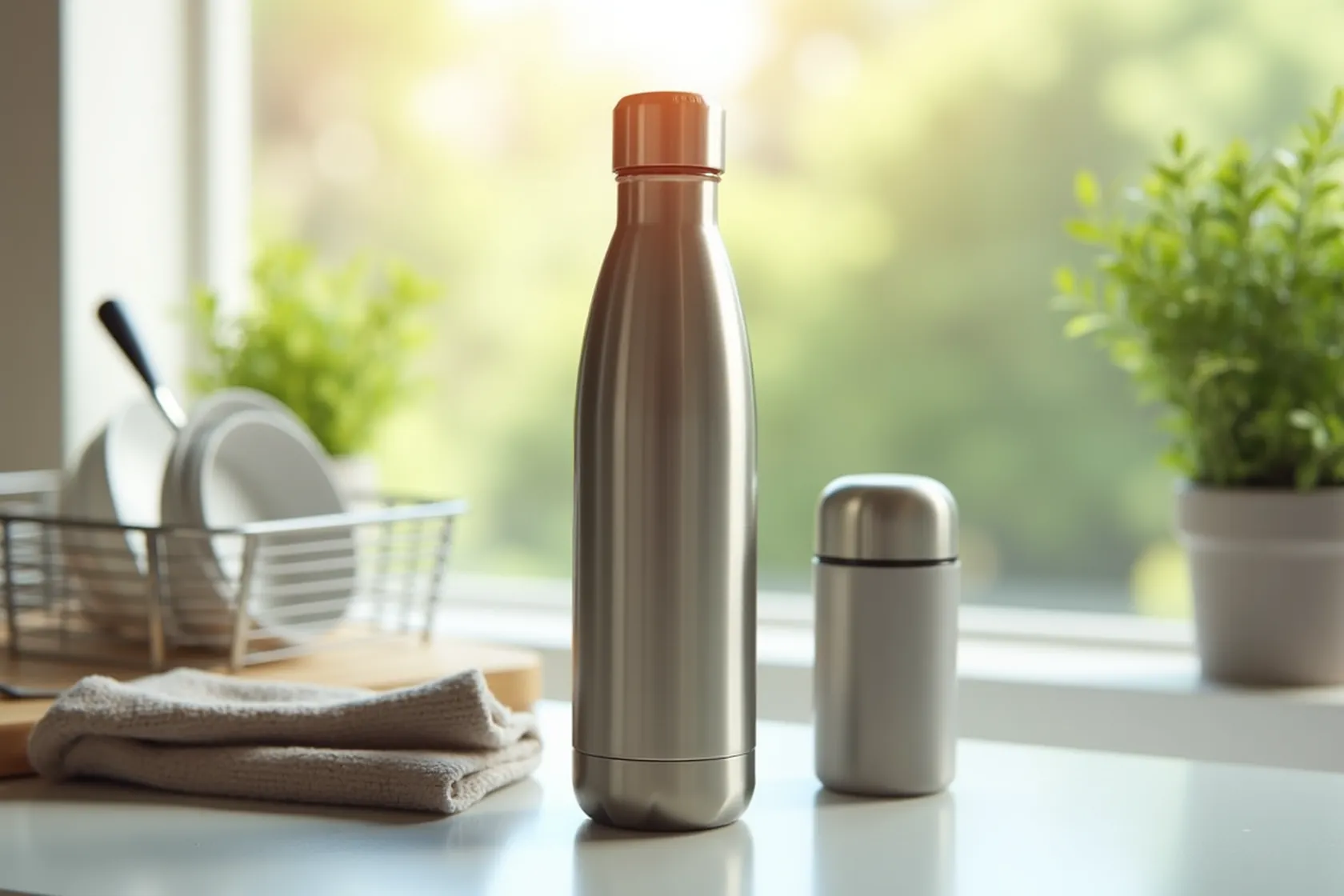
If your bottle's mouth is too narrow for your hand or a normal sponge, cleaning it never feels finished. You rinse, you shake soapy water around, and the bottom and shoulders never really get scrubbed, so you are left unsure it is actually clean inside.
That is a design issue more than a discipline issue. A stainless steel insulated water bottle with a wide opening is easier to reach into with an ordinary sponge or a bottle brush, and a lid you can take apart and rinse gets rid of the other hard-to-reach spot. This article covers what makes a bottle easier to clean, and how to judge that before you buy.
Wide mouth insulated bottle cleaning basics
The hardest part of cleaning any bottle is access. A narrow neck means your sponge stops where the neck ends, so the lower half of the bottle only ever gets a swill of soapy water. A wide opening lets you put your hand, a sponge or a dish brush down to the base.
Brands describe their own wide openings in similar terms. Hydro Flask calls its Wide Mouth opening "ice-cube friendly", and Owala points to a "wide opening for cleaning and adding ice". Those are descriptions of the opening rather than cleaning guarantees, but they point at the same practical thing: a bigger hole is easier to get into.
A wide opening is also easier to fill from a tap or a filter jug, and easier to drain and air-dry upside down. When cleaning is your priority, look at the opening before the ounce count.
Try This: Before buying, look at the size of the opening rather than the ounce count. If the mouth of your current bottle is narrower than the sponge you normally use, put opening size at the top of your checklist.
What an easy-clean lid actually means
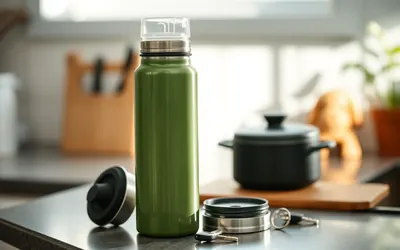
The bottle body is only half the job. Lids hold straws, gaskets, flip mechanisms and spouts, and those are the parts that stay damp. A lid counts as easy to clean when the brand tells you how to take it apart and what can go in the dishwasher.
Compare the wording, because it varies a lot. Simple Modern says its water bottle and straw lid are top-rack dishwasher safe and that the lid should be washed in the open position, with the bottle, lid and straw disassembled first. Owala says the lid is top-rack dishwasher safe and the straws can go in the silverware bin, but recommends hand-washing the cup to protect the finish. CamelBak simply says "the whole thing is dishwasher safe".
Iron Flask is the useful counter-example: its care page says never to put the powder-coated bottle in the dishwasher, though the lids can go on the top rack. That is a bottle you would hand-wash every time, which makes a wide mouth and a lid you can fully open even more important.
- Check whether the body, the lid or both are dishwasher safe.
- Look for a lid that opens wide or comes apart for rinsing.
- Check whether straws are removable and where they can be washed.
Try This: Rinse the lid the moment you finish a bottle, before you put it in the bag or on the desk. A quick rinse while the lid is open takes seconds and keeps residue from drying in the seams.
Straw lids, spout lids and screw caps compared
If cleaning is your main concern, the simplest lid is usually the easiest to keep clean, because it has the fewest parts. Takeya's Spout Lid "securely screws closed for zero leakage", and Takeya says the bottle is dishwasher safe and "easy to handwash too". Hydro Flask lists its 32 oz Wide Mouth as dishwasher safe without spelling out which parts that covers, so it is worth confirming before you rely on it.
An insulated straw water bottle is the most convenient to drink from and the most fiddly to clean, because the straw is a tube. That does not make it a bad choice, but it does mean the straw needs its own attention. Owala's FreeSip has a built-in straw and a push-button flip lid. Stanley's IceFlow flip straw snaps shut for carrying. Simple Modern's Summit uses a straw lid with a handle.
Flip and magnetic lids sit somewhere in the middle. CamelBak's Chute Mag cap has a magnetic top that stows out of the way when open and stays leak-proof when closed, and the brand says the whole bottle is dishwasher safe.
Try This: If you choose a straw lid, clean the straw as its own item, not part of the bottle. Rinse it through with warm soapy water and let it dry separately before you reassemble.
Cleaning rules differ by brand, so read them
"Dishwasher safe" is not one standard. Some brands mean the whole bottle, some mean the lid only, and some mean the lid only on the top rack. Reading the care page before you buy saves you from ruining a finish you paid for.
Some brands also restrict what goes inside, which affects cleaning because sticky or sugary drinks leave more behind. Owala says the stainless FreeSip "shouldn't be used with hot, carbonated, or perishable liquids". Simple Modern says its bottle is "not intended for hot liquids" because pressure may build and cause leaks or spills. Stanley's care guidance says dishwasher safe, but not for hot liquids, the microwave, the freezer or the stovetop. Hydro Flask, Takeya and CamelBak all publish hot-drink figures, so those are the ones to consider if you want coffee or tea.
None of this replaces the basics: rinse daily, wash with warm soapy water, and let every part dry fully before it goes back together.
Try This: Keep the care page for your bottle saved or screenshotted on your phone. When you are standing at the sink in the morning, you will not want to go looking for whether the lid is top-rack only.
The habits that keep a bottle fresh between washes
Good design makes cleaning easier, but it does not do the cleaning. A few small habits do most of the work.
- Empty and rinse at the end of each day rather than leaving water sitting overnight.
- Leave the lid off and the bottle upside down to dry, so air reaches the base.
- Take the lid apart where the brand allows, and let straws and gaskets dry separately.
- Wash after anything other than plain water, especially drinks with sugar or flavour.
- Retire a bottle whose seals are cracked or whose coating is flaking; brands generally exclude normal wear from warranty cover.
If you have an injury or a health condition, or you are unsure how to clean a specific bottle properly, check with a healthcare professional or the brand rather than guessing.
Try This: Set the bottle upside down in the drying rack with the lid off before you go to bed. A full night of air does more than a rushed rinse in the morning.
How to choose without relying on review sites
Fair question, and a reasonable one to ask of any site. Here is how this article was put together, so you can judge it.
The details here come from each brand's own US product and care pages, gathered for our best insulated water bottles buying guide. That is where a figure like a dishwasher instruction or a warranty exclusion comes from, and it is why you see brand wording quoted rather than paraphrased into a promise. We have not physically tested these bottles, and the guide says so at the top rather than in small print at the bottom. Brands cannot pay for a spot in the list.
What we can offer is a paper trail. When a claim changes by size, we say so: CamelBak's cold hours differ between its 20, 25, 32 and 40 oz Chute Mag. When a brand's product page and warranty page disagree, we say that too: Iron Flask's product page says "Lifetime warranty" while its warranty page excludes leaking after more than a year of use.
That does not make us the right source for everyone. Use it as a starting point, then check the current care instructions on the brand's page for the exact size and colour you buy, because lids, finishes and dishwasher guidance can change between models.
We may earn a commission from links on our guides at no extra cost to you, which is disclosed on the guide itself. It does not change what the brands' pages say, and it is why the specifications are attributed rather than presented as our own findings.
Try This: Pick two bottles you are considering and open both care pages side by side. Compare three things only: whether the body is dishwasher safe, whether the lid comes apart, and what the warranty excludes.
The Bottom Line
A wide opening and a lid you can take apart are the two details that make an insulated reusable water bottle easier to keep clean, because they give you access to the parts that are otherwise hard to reach. Check the brand's own care page before you buy, since dishwasher guidance and warranty exclusions differ from bottle to bottle. Our best insulated water bottles guide compares seven options on lid, sizes and cleaning rules, with every spec attributed to its brand.
General information only, not medical advice. Talk to your doctor before making big changes to your diet, exercise or sleep, especially if you have a health condition or take medication. See our medical disclaimer and editorial policy.