Why Does My Insulated Water Bottle Sweat? A Desk Guide
Your bottle leaves a wet ring on your paperwork and the water tastes warm by mid-morning, so you drink less than you meant to, and the question, why does my insulated water bottle sweat, is the right place to start.
 By WellnessTrim Editorial Team
6 min read
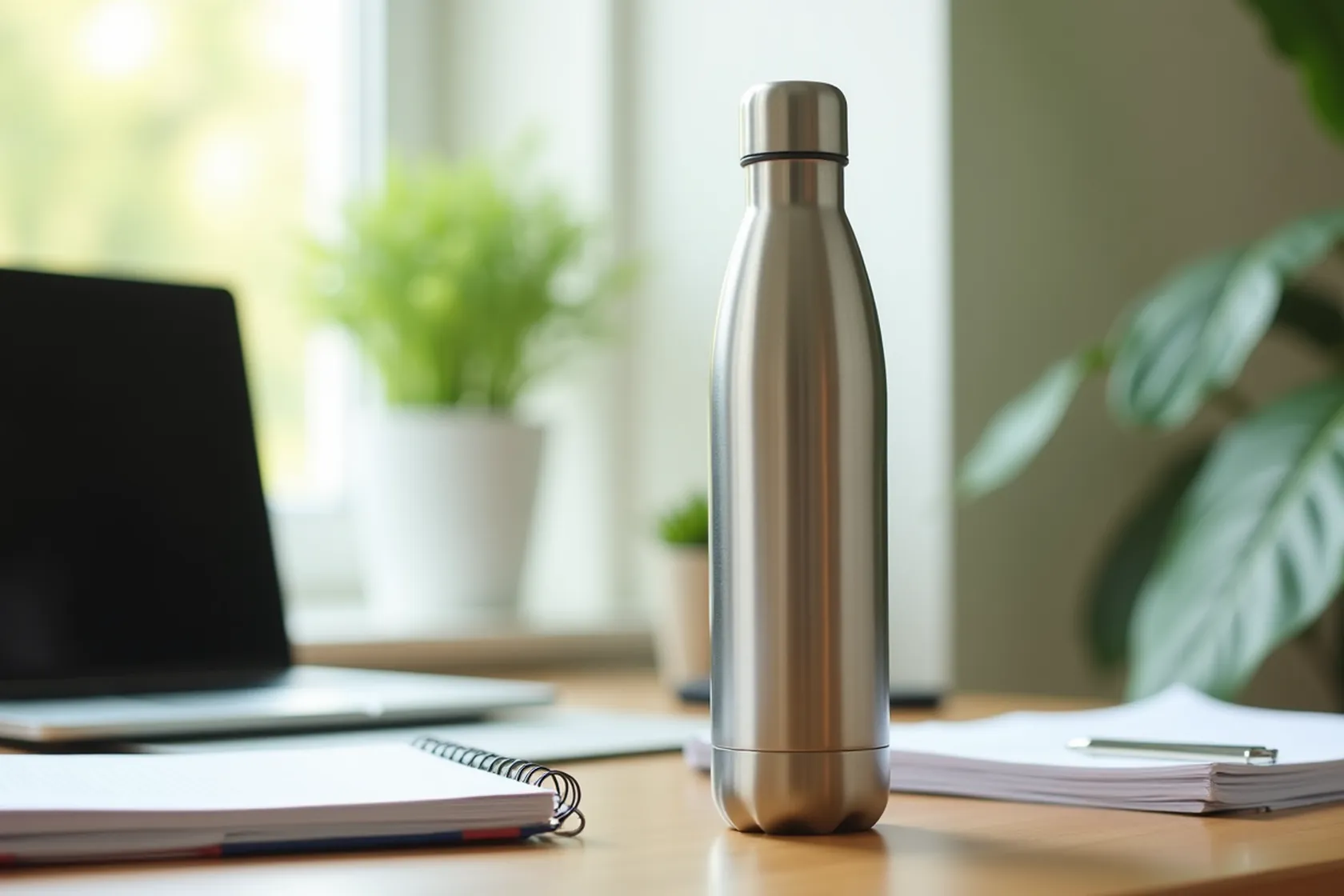
Two things usually go wrong at the same time: a bottle that leaves condensation on your desk and water that stops tasting cold a couple of hours after you fill it. Both come down to how the bottle is built, and both are things you can check before you buy rather than after.
Choosing an insulated reusable water bottle for a desk is mostly a lid-and-size decision once you know what the insulation wording means. Below is how to read the details that matter for a bottle you keep within reach all day, using published brand information rather than a spec sheet. For the full numbers side by side, our best insulated water bottles guide compares seven picks.
Why Does My Insulated Water Bottle Sweat?
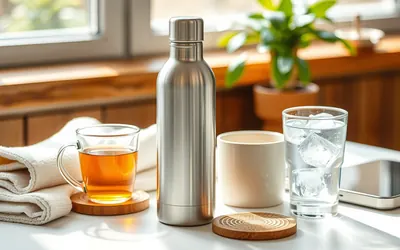
If your bottle leaves a wet ring on your notes, the insulation is the place to look, not a coaster. Takeya says its Actives bottle keeps liquid cold for 24 hours "while preventing exterior sweat," and Iron Flask describes its Wide Mouth as "sweat-proof." Both brands are describing a bottle whose outside stays dry, and that wording is what you want to find on a product page.
Construction lines vary in how much they spell out. Owala describes "triple-layered, vacuum-insulated stainless steel," Hydro Flask calls its version TempShield double-wall vacuum insulation, and Simple Modern calls the Summit "double-walled, insulated stainless steel." Where a page says less, you simply have less to go on. Our buying guide lines up seven picks, and the real differences between them sit in the lid, the size and the cleaning rules.
Try This: Search the product page for the construction line — vacuum insulation, double wall, or a plain statement that the outside stays dry — and read it before you look at the colour options.
What "24 hours cold" actually means
Cold-hour figures are the brand's own claim, not a result from a lab we ran. Most bottles in our guide land around the 24-hour mark: Owala, Hydro Flask, Takeya and Iron Flask all state 24 hours cold, Simple Modern's page carries a "Cold for 24+ Hours" feature, CamelBak claims 32 hours for its 32 oz Chute Mag, and Stanley claims 12 hours cold for its IceFlow tumbler.
Read any figure as a best case for a full, closed bottle. Our guide notes that opening the lid often, a half-full bottle or a hot day can all shorten it. For a workday, a 24-hour claim leaves slack for a bottle you open every hour, and CamelBak's own numbers show how much size matters: 24 hours cold on the 20 oz, 32 on the 32 oz, and 36 on the 40 oz.
None of this is medical advice. If a health condition affects how much you drink, check with a healthcare professional — see our medical disclaimer.
Try This: Match the claim to your day rather than to the biggest number. If you refill at lunch, a 12-hour claim covers the morning fine; if you want one fill to last, look for a 24-hour claim and a lid you close between sips.
Pick the lid before the bottle
The lid decides three things: how you drink, whether the bottle survives a bag, and whether you can put anything hot in it. Sealing wording is worth reading closely. Simple Modern says its straw lid is "leak-proof when the nozzle is in the closed position," Owala says its carry loop "doubles as a lock when closed," and Takeya says its Spout Lid "securely screws closed for zero leakage." Check each lid's own claim rather than assuming they behave the same.
For hot drinks, read the small print first. Owala says its stainless FreeSip "shouldn't be used with hot, carbonated, or perishable liquids," and Simple Modern and Stanley both say their straw-lid models are not for hot liquids. Hydro Flask, Takeya and CamelBak all publish hot-hour figures, Hydro Flask at 12 hours for its 32 oz Wide Mouth.
Try This: Open and close the lid a few times before buying, or watch a short video of it. A lid you can close one-handed gets used; one that needs two hands tends to stay open on the desk, which is how a bottle ends up on its side.
Choose a size you will actually lift
Sizes in our research run from 14 oz, the smallest IceFlow, up to 64 oz from Takeya and Iron Flask. A 24 or 32 oz stainless steel insulated water bottle sits in the middle, and it is the size most of our picks are listed in. A cool insulated water bottle you are happy to lift does more for your day than a bigger one you avoid.
Weight matters as much as volume. Hydro Flask lists 0.97 lb for its 32 oz, CamelBak 493 g for its 32 oz, and Stanley 1.30 lb for its 30 oz tumbler. Those are empty weights; a full bottle is heavier.
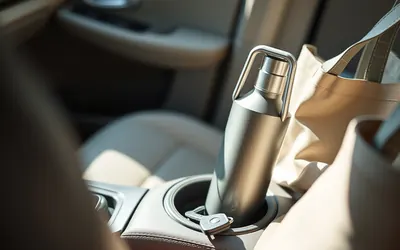
Cup-holder fit varies by brand and size: Simple Modern says its 14–30 oz Summit bottles fit most cup holders, Stanley says the IceFlow fits most car cup holders, and Amazon's listing for the 32 oz Owala FreeSip says it is not compatible with standard car cup holders. If you like ice, check the opening size as well, because a narrow neck will not take full-size cubes. A water insulated bottle with a wide opening is easier to fill, clean and dry.
Try This: Fill your current bottle to the top and carry it one-handed across the room. If that feels like work, buy the smaller size; the bottle you can move easily is the one that stays filled.
Cleaning rules vary more than you would expect
"Dishwasher safe" means different things across these brands. CamelBak says the whole 32 oz Chute Mag is dishwasher safe, and Stanley and Takeya both list their bottles as dishwasher safe. Simple Modern's bottle and straw lid are top-rack only, and should be washed with the lid open and the parts disassembled. Owala says the lid and straws are top-rack dishwasher safe but "strongly recommend" hand-washing the cup to protect the finish.
Iron Flask is the strictest: "Never put your Iron Flask in the dishwasher," because heat and the wash process can affect the powder-coated finish. Its lids are fine on the top rack. Whatever you buy, take the lid apart and let every part dry fully before you reassemble it.
Try This: Wash the lid before the first fill, not after the first week. Straws and spouts are the parts that get missed, and Owala says its straws can go in the silverware bin.
Warranty small print, and what you pay
Most brands here advertise a lifetime warranty, but the cover is not the same. Stanley's lifetime warranty "covers degradation of thermal performance" and does not cover non-stainless-steel parts or normal wear and tear. Simple Modern covers broken lids and drinkware that has lost its insulating properties but not dents or scratches. Iron Flask's warranty page excludes leaking after more than a year of use.
Prices move, so read these as a snapshot from the brands' own US sites on the check date: Simple Modern Summit $22.99 for 22 oz, CamelBak Chute Mag $29.99 for 32 oz on sale from $38.99, Takeya Actives $32.99 for 24 oz, Iron Flask Wide Mouth $32.99 for 32 oz, Stanley IceFlow $35 for 30 oz, Owala FreeSip $39.99 for 32 oz, and Hydro Flask Wide Mouth $44.95 for 32 oz. The full comparison, lid by lid, is in the insulated water bottle guide.
Try This: If you are replacing a bottle because it stopped keeping water cold, check whether the warranty covers lost insulation. Stanley's explicitly does; Iron Flask's page excludes leaks after more than a year.
You have been burned by review sites. Here is our process
It is a fair objection, and the honest answer is that we research rather than test. The specs, cold claims, cleaning instructions and warranty lines in our guide come from the brands' own US product, care and warranty pages, checked on the date shown at the top of the guide. Where a brand's terms page could not be read, we say only what the product page stated. We say plainly that we have not done hands-on testing, and we do not pretend otherwise.
Brands cannot pay for a place in the guide. We do use affiliate links, which means we may earn a commission if you buy through them at no extra cost to you, and the guide discloses that. Where a listing conflicts with a brand page, we say so instead of smoothing it over: Amazon lists a newer Stanley IceFlow 2.0 with longer cold claims than the Stanley page we read, so the guide uses the brand's figures and marks the Amazon match unconfirmed.
What you can do with any review site, including this one: look for a check date, a clear statement of what was and was not tested, and a visible affiliate disclosure. More everyday guides sit in our Healthy Living section if you want to compare how we write about other products.
Try This: Before you trust a list, find the date it was checked and the sentence that says what the writer did not test. Both are cheap to publish, so their absence tells you something.
The Bottom Line
A bottle that stays cold and dry on your desk comes down to how it is insulated, a lid that seals, and a size you will actually lift. Start with the construction line and the lid, then read the cold-hour claims as a best case rather than a promise. Our best insulated water bottles guide has the full numbers side by side.
General information only, not medical advice. Talk to your doctor before making big changes to your diet, exercise or sleep, especially if you have a health condition or take medication. See our medical disclaimer and editorial policy.