How to Use a Massage Gun Safely: Time, Speed and Placement
 By WellnessTrim Editorial Team
5 min read
By WellnessTrim Editorial Team
5 min read
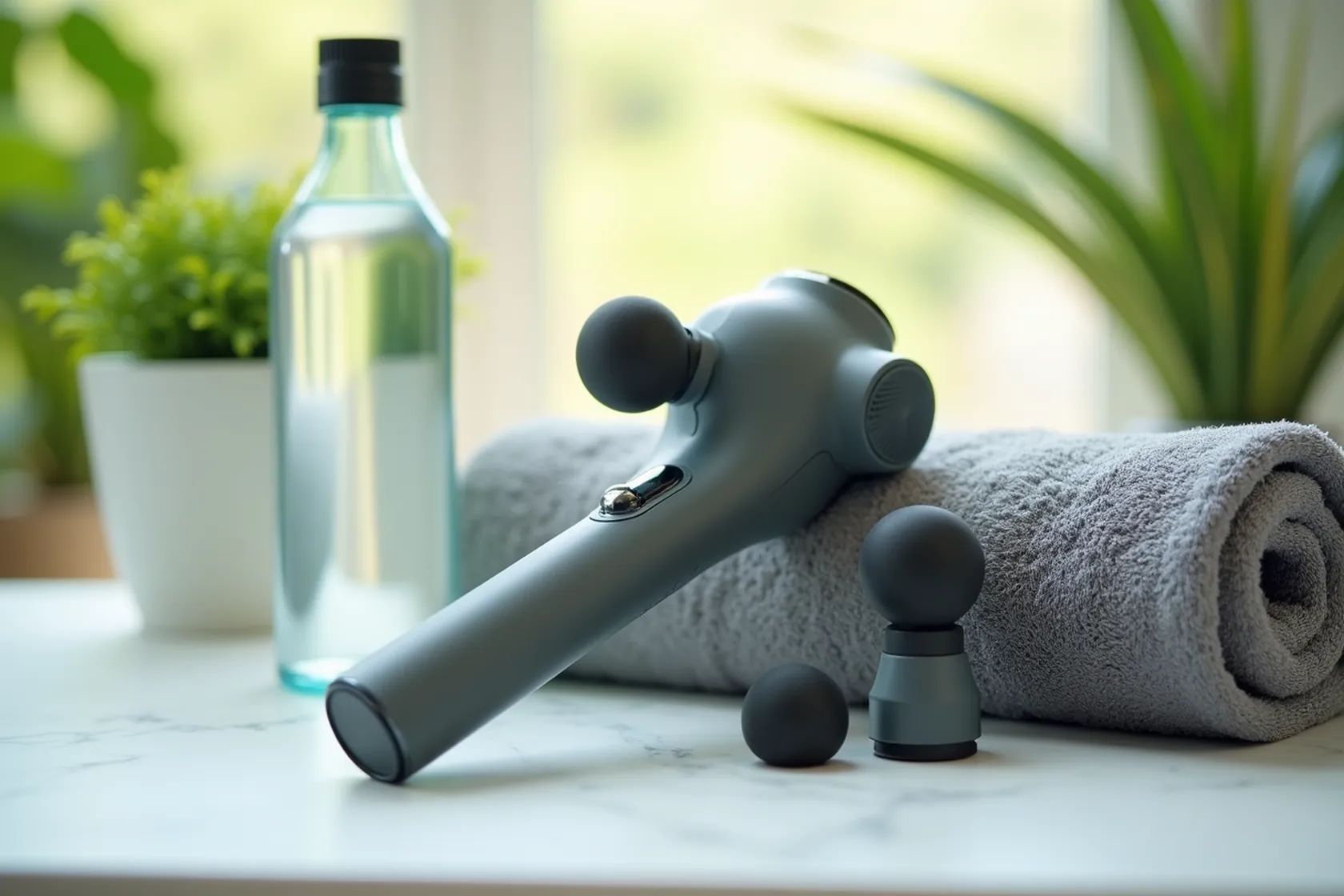
A massage gun is easy to switch on and just as easy to overdo. The published guidance from the brands that make them, and the health-program guidance published by Bob and Brad, is mostly about restraint: short sessions, muscle only, and a speed you can hold comfortably.
This article collects that guidance - session length, where to avoid using a gun, speed, pressure and attachments - and flags the specs worth checking before you buy. If you are still choosing a device, our best massage guns guide compares seven models on the specs each brand actually publishes. It is general information, not medical advice: follow the manual that came with your device, and check with a healthcare professional if you have an injury or a condition.
How long to use it on one spot
The health-program guidance published by Bob and Brad advises about 10 to 20 seconds per spot and a maximum of 2 minutes per muscle. That is shorter than most people assume.
Some devices build in their own limit regardless: the RENPHO Active+ has a 10 minute auto-off.
Battery figures are best-case. Therabody notes that its battery life is tested at the lowest speed setting and that actual battery life varies by use, so a big hours-per-charge number does not mean a longer session per muscle.
Try This: Pick a few spots before you start and work through them, rather than staying on one point until it feels like enough.
Where not to use it
Therabody lists direct application to the face, head, throat, neck or genitalia as a contraindication, and says to seek a medical professional's advice before use with conditions such as a recent injury or surgery, open wounds or bruises, a bone fracture, blood-thinning medication or pregnancy.
Renpho says not to apply its device to the head, face, throat or cervical spine, and to consult a doctor first if you are pregnant or have a heart condition, pacemaker or metal implants.
Bob and Brad's guidance adds bony areas such as the spine and kneecaps to the places to skip.
Try This: Keep the gun on soft tissue, and if you are not sure whether a spot is muscle or bone, leave it alone.
Speed and pressure
Of the seven models in our guide, six list five speeds and the Theragun Mini lists three. Where a range is published: the RENPHO Active+ runs 1,800 to 2,800 rpm, the Hypervolt 3 runs 1,500 to 2,500 RPM, the Ekrin B37 runs 1,400 to 3,200 RPM and the Opove M3 Pro runs 1,300 to 2,500 RPM. Brands do not all use the same unit - Therabody quotes PPM, and lists the Theragun Mini's speeds as 1,750, 2,100 and 2,400 PPM - so compare ranges rather than single figures.
Speed count is not the same as speed range. Therabody lists five speeds for the Prime and PRO Plus and three for the Mini, with more unlocked through the Therabody app; it does not publish PPM for the Prime or PRO Plus.
Two models give feedback on pressure as you go: Therabody says the Prime shows how much pressure you are applying in real time, and Hyperice says the Hypervolt 3 pairs its five speeds with pressure sensor technology to help guide your intensity.
Try This: Start on the lowest setting and step up one speed at a time instead of pushing harder into the muscle.
Choosing an attachment
Attachment shape matters more than attachment count. Therabody's buying guide suggests a softer or dampener head for areas near bone, a ball for general use, and a thumb or bullet head for small spots.
- Theragun Prime: 2 in the box (Dampener, Standard Ball); Wedge, Thumb and Supersoft are sold separately.
- Theragun Mini: 3 (Dampener, Standard Ball, Thumb).
- Theragun PRO Plus: 7, including heat and vibration attachments; the Cold Plus attachment is sold separately at $99.99.
- Hypervolt 3: 5, including a heated head attachment.
- Ekrin B37: 4 locking attachments (Flat, Bullet, Round silicone, Fork).
- Opove M3 Pro: 6 (Flat, Ball, Spade, Bullet, Fork, Cushion).
- RENPHO Active+: 5 (bullet, crescent, annular cushion, ball, U-shaped).
Try This: Read the what's-in-the-box list before buying, because on some models the head you want most is sold separately.
Weight, reach and travel
Weight and handle shape decide whether you can comfortably reach your own back and shoulders. Therabody's buying guide points to handle design for hard-to-reach areas such as the lower back, and Ekrin's B37 uses a 15 degree angled handle.
Listed weights in this roundup run from about 0.9 to 1.1 lb for the minis up to 1,650 g (3.64 lb) for the Theragun PRO Plus, with the Theragun Prime at 1.99 lb, the Hypervolt 3 at 2.0 lb, the Ekrin B37 at 2.2 lb and the Opove M3 Pro at 2.43 lb.
If you travel, check the charger type. The Theragun Prime, Mini and PRO Plus, the RENPHO Active+ and the Ekrin B37 charge over USB-C, while the Hypervolt 3 uses an 18V wall charger for the gun, with USB-C for its heated head attachment. Opove lists a charger in the box without stating the type. Therabody labels the Theragun Mini as TSA-approved size and gives it a travel lock so it does not power on in a bag; airline battery rules are the airline's to set, so check current guidance before you fly.
Try This: If you mainly plan to use the gun on your own back, decide on reach first and features second.
Before you buy
Manufacturers publish very different amounts of information. On the pages checked, amplitude is stated for the full-size Theraguns (16 mm) and the Mini (10 mm), and stall force is stated by Renpho (50 lb) and Opove (70 lb) but not by Therabody, Hyperice or Ekrin for these models. Where a brand leaves a spec blank, that is worth knowing before you compare prices.
Our best massage guns guide sets out spec, price and warranty for seven models side by side, from the $79.99 RENPHO Active+ to the $649.99 Theragun PRO Plus, so you can match the numbers to how you plan to use one.
Warranties differ too: Therabody lists a 1-year limited warranty on these models, while Hyperice's US warranty article states a 1-year warranty for manufacturing defects. Renpho offers an 18-month warranty for purchases from its own site, Opove a 1-year warranty, and Ekrin a lifetime warranty with two years on the battery (register within 30 days if you buy from another retailer).
Try This: Write down the three specs you care about most - stroke depth, weight and stated noise - and compare only those.
The Bottom Line
Most of the safety advice around massage guns is about doing less: 10 to 20 seconds per spot, a maximum of 2 minutes per muscle, muscle tissue only, and the lowest speed that feels useful. Keep the device away from the face, head, throat, neck and bony areas, and check with a healthcare professional first if you have an injury or one of the conditions a brand lists. If you are still choosing, our best massage guns guide compares the specs each brand actually publishes.
General information only, not medical advice. Talk to your doctor before making big changes to your diet, exercise or sleep, especially if you have a health condition or take medication. See our medical disclaimer and editorial policy.